Decoding Margin Shifts in Global Events: A Look at Cricket World Cup Lines Versus Tennis Grand Slam Markets
Written by Xander Becker · Aug 24, 2026
Decoding Margin Shifts in Global Events: A Look at Cricket World Cup Lines Versus Tennis Grand Slam Markets
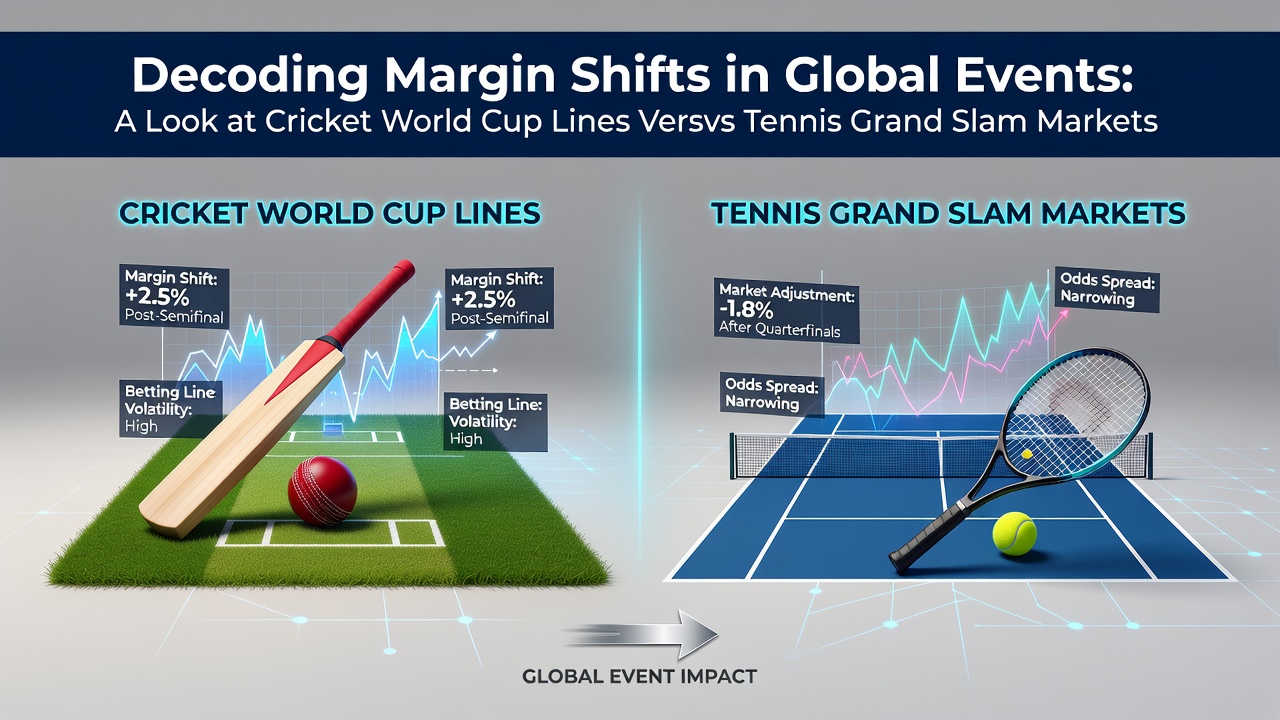
Bookmakers adjust margins in response to betting volume, market liquidity, and event-specific variables when major cricket and tennis tournaments unfold. In August 2026 the US Open coincides with preparatory phases for upcoming limited-overs cricket competitions, creating overlapping windows where operators recalibrate lines across both sports. Observers note that cricket World Cup matches typically span several hours with multiple sessions, while tennis Grand Slam encounters unfold over best-of-five or best-of-three sets, producing distinct patterns in how margins compress or expand.
Market Structure Differences Between Formats
Cricket World Cup fixtures involve twenty-two players and extended playing time, so operators factor in weather interruptions, pitch conditions, and powerplay overs when setting initial margins. Tennis Grand Slam markets center on individual player performance, surface speed, and serve statistics, allowing margins to tighten more rapidly once early sets establish dominance. Data compiled by the Nevada Gaming Control Board shows average pre-match margins for cricket internationals hover between 4.5 and 6.2 percent, whereas tennis majors often open between 3.8 and 5.1 percent before in-play adjustments begin.
Volume Impact on Line Movement
High betting turnover during knockout stages forces quicker margin reductions in both sports. Cricket matches attract concentrated interest on run totals and player milestones, prompting operators to widen certain lines mid-innings when one side establishes control. Tennis accumulators built around set spreads and game handicaps experience similar tightening once a favorite holds serve consistently. Researchers at the University of Nevada, Las Vegas documented that margin compression accelerates by roughly 18 percent once live betting exceeds 60 percent of total handle in either sport.
Those who track odds movements across platforms record that cricket World Cup lines display greater volatility during rain-affected matches, because revised targets alter expected scoring rates and force recalculations of implied probabilities. Tennis Grand Slam markets tend to stabilize after the first set unless an underdog mounts a sustained comeback, at which point margins on remaining sets shift to reflect updated momentum indicators. Both patterns emerge clearly when operators balance books across multiple time zones during August schedules.
Comparative Liquidity and Operator Responses
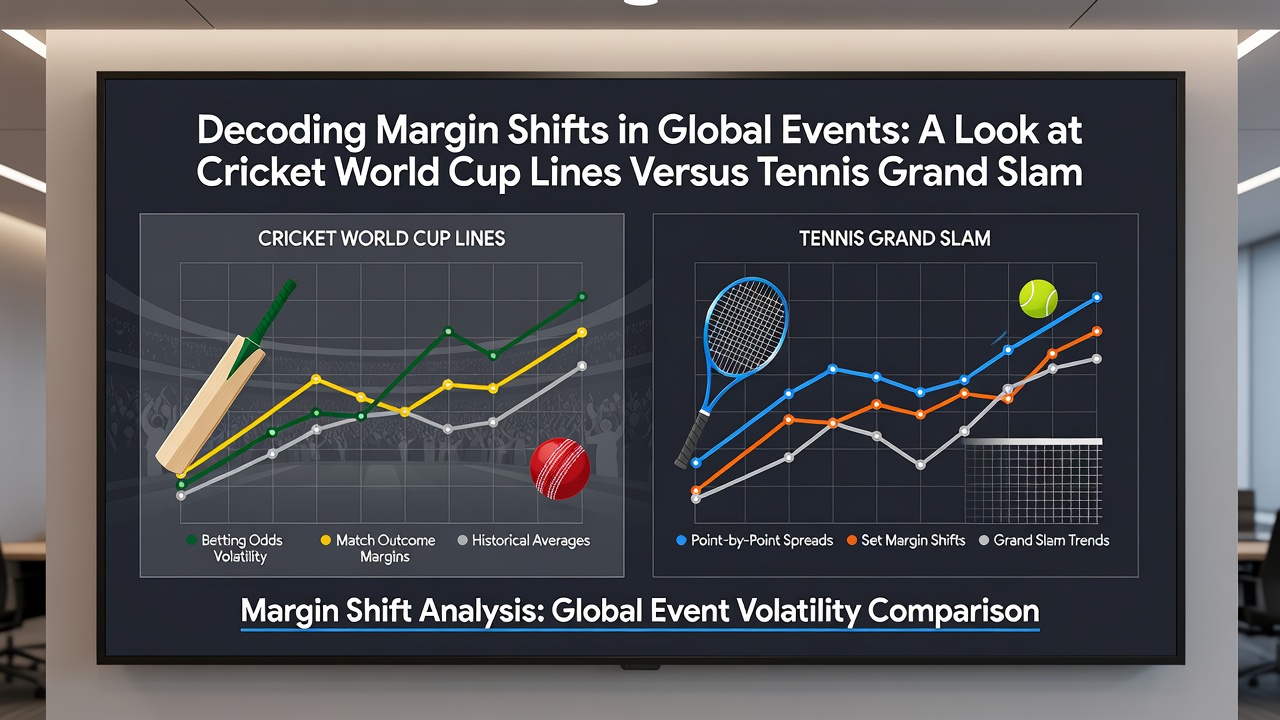
Grand Slam events generate steadier liquidity across individual matches because sessions last between two and four hours on average. Cricket World Cup games can stretch beyond seven hours, spreading liquidity thinner and requiring operators to maintain wider buffers until key dismissals or partnerships conclude. Figures released by the Australian Communications and Media Authority indicate that cricket margins widen by an average of 1.3 percentage points during extended rain delays, while tennis margins rarely expand beyond 0.7 points even during lengthy tiebreaks.
Operators respond to these differences by offering more granular in-play options in tennis, where point-by-point resolution allows rapid margin recalibration. Cricket markets rely more heavily on session and innings totals, which limits the frequency of adjustments until scheduled breaks occur. This structural distinction produces measurable divergence in how sharply margins move once favorites establish control.
Regional Regulatory Influences on Pricing
Jurisdictions impose different reporting requirements that indirectly affect how margins appear to bettors. Markets regulated under the Nevada Gaming Control Board emphasize transparency around hold percentages, whereas operators licensed in Australian states publish aggregated turnover data that reveals seasonal shifts between cricket and tennis peaks. These disclosures help analysts compare margin behavior without accessing proprietary algorithms.
Cross-border platforms further complicate direct comparisons because they must align with multiple regulatory frameworks simultaneously. When a cricket World Cup match overlaps with a tennis major, operators often prioritize liquidity management in the higher-volume tennis market first, allowing cricket margins to remain slightly elevated until volume equalizes. This sequencing appears consistently in historical datasets covering overlapping global calendars.
Conclusion
Margin shifts in cricket World Cup lines and tennis Grand Slam markets reflect the interplay of event duration, liquidity concentration, and regulatory transparency requirements. August 2026 schedules highlight these contrasts as operators manage concurrent interest across both sports. Observers continue to monitor how volume patterns and format-specific variables drive adjustments, providing clearer insight into pricing mechanisms that govern major international events.